






















Margaret Rudin | The Las Vegas Black Widow

Margaret Rudin, the Las Vegas Black Widow, served 20 years for her husband Ron Rudin’s murder -before her conviction was vacated in 2022.

Margaret Rudin | Murderer
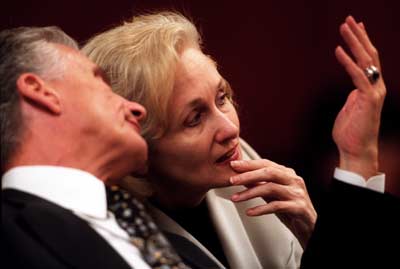
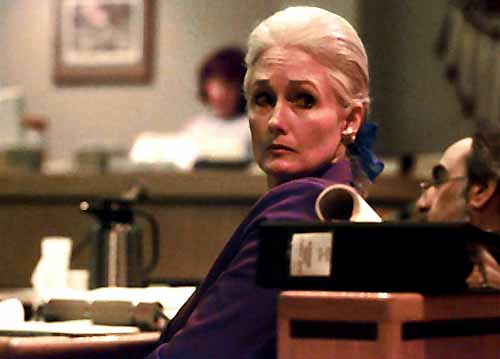
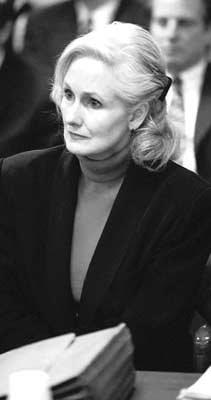
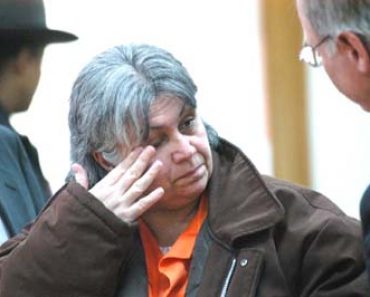
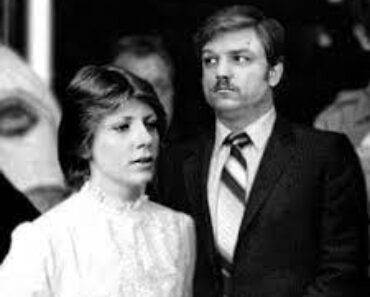
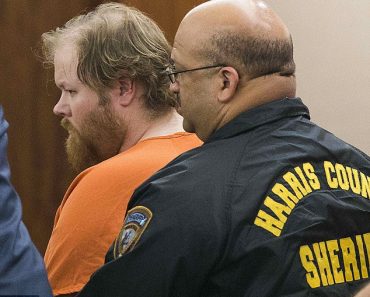
photo from court

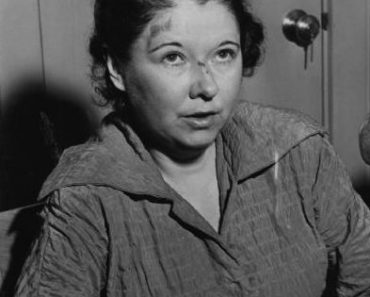
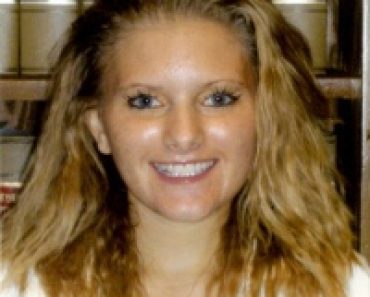
Margaret Rudin

American Female Murderer


Margaret Rudin | The Las Vegas Black Widow

Crime Spree: 12-18-1994


  • Full Name: Margaret Lee Frost Rudin
  • Alias: The Las Vegas Black Widow
  • Born: May 31, 1943 (Memphis, Tennessee, USA)
  • Occupation: Antique shop owner, socialite, and real estate investor’s wife
  • Victim: Ronald Rudin, age 64 – successful Las Vegas real estate businessman
  • Date of Disappearance: December 18, 1994
  • Body Discovered: January 21, 1995 – near Lake Mohave (Nevada/Arizona border)
  • Murder Method: Gunshot wounds (five .22-caliber bullets to the head)
  • Body Disposal: Dismembered and burned inside an antique trunk
  • Weapon Used: .22 Ruger pistol later recovered from Lake Mead
  • Arrested: November 1999 (after 31 months on the run)
  • Trial Began: March 2, 2001 – Clark County, Nevada
  • Convicted: May 2, 2001 – First-degree murder with use of a deadly weapon
  • Sentence: Life in prison with parole eligibility after 20 years
  • Time Served: Approximately 20 years (released January 10, 2020)
  • Conviction Vacated: 2022 (for ineffective counsel)
  • Charges Dismissed: December 2024, with prejudice (cannot be retried)
  • Known As: “The Black Widow of Las Vegas” – a title that would follow her long after freedom

Margaret Rudin is typically classified as a suspected domestic-motivated killer, falling within the category of “Black Widow” offenders – term used for women who allegedly kill spouses for financial or personal gain.

Her case represents the intersection of motive, money, and media mythology: prosecutors painted her as a calculating woman who murdered Ron Rudin to prevent a divorce and retain access to his multimillion-dollar estate. Psychologically, this type of narrative often aligns with narcissistic and opportunistic behavioral patterns, though no clinical diagnosis was ever confirmed.

However, her defense team – and later federal rulings – suggested a more nuanced profile. Rudin was portrayed as a socially adaptive, high-functioning individual caught in an environment of suspicion, community gossip, and legal incompetence. Decades of debate have left her standing at the crossroads between villain and victim, emblematic of how media sensationalism can crystallize a nickname before a verdict is even fair.

Her story fits squarely within the archetype of the American Black Widow mythos – a woman accused of using charm, wealth, and proximity to death as tools of survival – but unlike most, her conviction was ultimately vacated, leaving her fate a permanent question mark in the annals of Las Vegas true crime.


Margaret Rudin | The Las Vegas Black Widow

The Story

Chronology of Events – The Las Vegas Black Widow

The Disappearance

On December 18, 1994, Ronald Rudin, a 64-year-old Las Vegas real estate investor, failed to show up for business appointments and social engagements. His wife, Margaret Rudin, claimed he had gone to meet someone about an investment opportunity. Friends and business partners quickly reported him missing – unusual for a man known for his punctuality and rigid routine.

At the time, Margaret Rudin, already on her fifth marriage, was operating a small antique shop and living with Ronald in a lavish estate near Desert Shores. The couple’s marriage had reportedly grown tense over money and rumors of infidelity. Ronald’s will, discovered later, named his wife as a primary heir – but only if she remained married to him at his death.


The Discovery

On January 21, 1995, hikers near Lake Mohave, close to the Nevada–Arizona border, stumbled upon a half-burned antique steamer trunk. Inside were charred, dismembered human remains. Forensic investigators later matched dental records to Ronald Rudin.

He had been shot five times in the head with a .22-caliber weapon, dismembered, and set ablaze in the desert. Nearby, investigators found melted metal fragments and partially burned personal effects. The level of violence suggested rage or panic, rather than a clean execution – though the method pointed to premeditation.


The Investigation

Authorities soon searched the couple’s home. Blood spatter was detected in the bedroom, along with a patch of carpet that appeared hastily replaced. Detectives also recovered shell casings and residue consistent with a .22-caliber Ruger pistol – the same make and model Ronald once owned but had reported missing.

A handyman who occasionally worked for the Rudins claimed he had helped Margaret dispose of an old trunk around the time Ronald disappeared. That statement would later become a cornerstone of the prosecution’s narrative.

Meanwhile, Margaret Rudin’s behavior drew attention – her comments to friends appeared inconsistent, and she quickly hired an attorney. Despite public appearances of cooperation, by April 1997, a Clark County grand jury indicted her for first-degree murder.


The Flight

Before authorities could make the arrest official, Margaret Rudin vanished.
For more than two and a half years, she lived under assumed names, moving from state to state – Arizona, Illinois, and Massachusetts – reportedly supported at times by acquaintances who believed she had been framed.

In November 1999, acting on a tip, law enforcement located and arrested her in Revere, Massachusetts, ending one of Nevada’s longest female fugitive searches. She was extradited back to Clark County to stand trial for her husband’s murder.


Margaret Rudin

The Trial

The trial of Margaret Rudin began on March 2, 2001, attracting national attention and earning her the enduring nickname “The Las Vegas Black Widow.”
The prosecution argued she killed Ron Rudin to prevent a divorce that would have cut her out of his multimillion-dollar estate. They described her as calculating, manipulative, and obsessed with maintaining her lifestyle.

The defense countered that Ronald had numerous enemies, including disgruntled business partners, and that the case was built entirely on circumstantial evidence.

On May 2, 2001, the jury found her guilty of first-degree murder, and she was sentenced to life imprisonment with parole eligibility after 20 years.


Imprisonment and Appeals

Incarcerated at the Florence McClure Women’s Correctional Center, Rudin maintained her innocence and fought for appeals.
Her case became notorious for the ineffectiveness of her trial counsel, Michael Amador, who was accused of pursuing a book and movie deal while representing her = a clear conflict of interest that would later prove pivotal.

For years, appellate courts denied her petitions, but persistence paid off when a federal judge revisited the claim of ineffective assistance of counsel.


Conviction Vacated

In May 2022, U.S. District Judge Richard Boulware II ruled that Margaret Rudin’s constitutional rights had been violated, citing her attorney’s “abandonment of professional responsibility.”
Her conviction was vacated, and she was no longer classified as a convicted murderer.

Two years later, in December 2024, the Clark County District Attorney’s Office dismissed all charges with prejudice, ensuring that she could never be retried for the Ronald Rudin murder.


Aftermath

Having already been paroled in 2020, Margaret Rudin left prison at age 76, later settling quietly in the Midwest. She now speaks occasionally about her case, advocating for criminal justice reform and the rights of wrongfully convicted women.

The debate endures: Was Margaret Rudin truly the Black Widow of Las Vegas, or a victim of media frenzy and legal incompetence?
Her story remains one of the most polarizing and enduring mysteries in Las Vegas true crime history.


Margaret Rudin | The Las Vegas Black Widow


The Marriage of Margaret and Ron Rudin – Love, Power, and Betrayal in Las Vegas

The Story

Margaret Rudin — The Woman Behind the Legend

Margaret Rudin, later dubbed the Las Vegas Black Widow, was born in Memphis, Tennessee, one of three daughters raised by a barber who kept his family on the move. By the time she graduated from high school, Margaret had lived in fifteen states, a restless upbringing that would shape her resilience and adaptability – qualities that would serve her both well and poorly in the years to come.

At just eighteen, she married a twenty-year-old carpenter. The couple had two children and stayed together for a decade before divorcing – the first of several broken marriages. Over the years, Margaret would marry and divorce three more times, including a short-lived union with a boat dealer. She was, by her own later reflection, a woman who believed in love, even after it failed her.

In the mid-1980s, fate – or perhaps something darker – crossed her path with Ronald Rudin, a powerful Las Vegas real estate mogul and millionaire nearly two decades her senior. They married in September 1987, and for a time, the match seemed charmed: wealth, social standing, and the promise of a final, stable marriage.

But beneath the glitter of their union, cracks began to form. Ron’s drinking and infidelity were open secrets. Margaret, ever composed, later told interviewers that such behavior “didn’t make her angry – it’s just what men do.” She insisted she loved Ron and wanted her fifth marriage to work. Those who knew them described her as vivacious and elegant, with a sharp wit and an ability to “command a room.” But others saw something else – ambition cloaked in charm, a woman unwilling to let go of the comfort she had finally secured.

Ron Rudin – The Self-Made Millionaire

Ronald Rudin, born November 14, 1930, was the only child of Stella and Roy Rudin of Joliet, Illinois. His father, a chemical company executive, died suddenly when Ron was ten, leaving Stella to raise him alone. The loss left a mark – one that would echo later in Ron’s obsession with control, money, and trust.

He served in the Illinois National Guard and completed a tour overseas before settling in Las Vegas, a city whose booming real-estate scene fit perfectly with his sharp instincts and relentless drive. Starting with small house flips, Ron worked his way up to building and selling homes across Clark County, earning a reputation as a self-made millionaire and a shrewd negotiator.

Ron’s wealth afforded him luxury – and indulgence. He loved hunting, flying, and fine liquor. He also had a weakness for beautiful women. Over the years, Ron married five times and had numerous affairs. His third wife died by suicide, his others left or divorced him, and yet he always found another to fill the void. When he met Margaret Frost, she seemed different: social, stylish, and strong-willed. The two shared a magnetic chemistry – volatile, passionate, and ultimately destructive.

The Rudins’ marriage blended opulence with instability. They argued fiercely and reconciled passionately. Ron showered Margaret with gifts – a Lincoln Continental, a lavish antiques shop, and access to a social circle few could penetrate. Yet for all his generosity, Ron Rudin trusted no one. Not his business partners, not his employees, and, eventually, not his wife.

Margaret’s access to his finances was limited. She received a modest allowance and profits from her shop, while Ron kept the true scale of his wealth under tight control. Friends later recalled that Ron had installed surveillance cameras and revised his will multiple times, fearing betrayal from those closest to him.

Still, he maintained an affair with Sue Lyles, his long-time mistress – an open secret in their social circle. The triangle of Ron, Margaret, and Sue would become one of the most gossiped-about scandals in 1990s Las Vegas, setting the stage for jealousy, suspicion, and a tragedy that would soon grip national headlines.

Then, on the morning of December 18, 1994, Ron Rudin vanished – leaving behind a city full of whispers, a furious wife, and a mystery that would turn into one of Nevada’s most infamous murder cases.


The Disappearance and the Desert Fire

A Vanishing in Plain Sight

On the morning of December 18, 1994, Ron Rudin, the self-made millionaire of Las Vegas real estate, vanished without a trace. The last confirmed sighting placed him leaving his home near Desert Shores, dressed casually, as if for a short errand. He never returned.

His wife, Margaret Rudin, told friends that Ron had gone to meet someone about a business investment. When he didn’t come home that night – or the next – she grew increasingly anxious. Friends, however, found her demeanor strange. Calm. Collected. Too composed, perhaps, for a woman whose husband of seven years had simply disappeared.

Within days, Ron’s employees and business partners reported him missing. Police were hesitant to jump to conclusions – this was Las Vegas, after all, and Ron was a man of secrets, known to disappear for days on deals, or with women, that didn’t involve his wife. But this time felt different. His car was untouched. His accounts unaccessed. His office silent.

By Christmas, whispers had turned to worry – and suspicion.

The Trunk in the Desert

On January 21, 1995, over a month after Ron vanished, two hikers made a grim discovery near Lake Mohave, on the Nevada–Arizona border. Smoke-blackened sand and the twisted remains of a metal steamer trunk caught their attention. Inside the burned container lay charred human bones and melted bullet fragments.

Forensic testing confirmed what everyone feared – the remains were those of Ronald Rudin.
He had been shot five times in the head with a .22-caliber weapon, dismembered, and placed in the antique trunk before it was set ablaze in the desert.

Investigators were horrified by the brutality – the methodical dismemberment, the attempt to destroy evidence, the choice of a trunk identical to the kind Margaret Rudin sold at her antique shop. And, as detectives noted grimly, the desert around Lake Mohave was not a place one stumbled upon by accident.

Margaret Rudin

Evidence Inside the Home

When police searched the Rudin residence, they found unsettling clues.
The carpet in the master bedroom had been recently replaced, and traces of blood were detected beneath the floorboards. There were also signs of an attempted cleanup – faint splatter patterns, consistent with high-velocity impact spatter.

Detectives later located a .22-caliber Ruger pistol in Lake Mead, the same model Ron owned – and the same weapon that ballistic analysis confirmed had fired the fatal bullets.

Friends recalled seeing Margaret Rudin remove an antique trunk from her shop shortly before Ron disappeared. One handyman claimed he helped her dispose of it, though his statements would later waver under cross-examination. Still, the circumstantial evidence piled higher with each passing day.

The once-glamorous couple’s home, once a place of affluence and parties, had become a crime scene filled with secrets and contradictions.

Rumors, Affairs, and Motive

As the investigation deepened, police uncovered the tangle of affairs and financial paranoia that defined the Rudins’ marriage.

Ron was known to be deeply distrustful of others, keeping his wealth and property titles shrouded in secrecy. He had reportedly amended his will several times, each change reducing Margaret’s inheritance and heightening her anxiety about a possible divorce.

Meanwhile, Ron’s mistress, Sue Lyles, emerged as an unintentional catalyst in the investigation. Her phone records, gifts, and letters confirmed that their relationship continued well into his marriage to Margaret – and had become increasingly public.

Prosecutors would later argue that Margaret Rudin’s motive was both financial and emotional – a desperate act to secure her place in Ron’s estate before he could leave her for another woman.

Supporters, however, painted a different picture: a woman scapegoated by circumstance, a convenient suspect in a community that loved gossip as much as it loved headlines.

The Legend Takes Shape

By the spring of 1995, the story of the Las Vegas Black Widow had taken on a life of its own. Newspapers splashed her name across front pages. Talk shows debated her guilt before she was even charged.

She had become both villain and victim, depending on which version of the story you believed — a portrait of American excess and dysfunction, set against the neon glow of Las Vegas.

And as whispers of indictment grew louder, Margaret Rudin quietly disappeared – beginning a fugitive journey that would last nearly three years and stretch across the country.


Margaret Rudin | The Las Vegas Black Widow


The Fugitive Years and Capture

A Wife Without a Country

By the time a Clark County grand jury indicted Margaret Rudin in April 1997 for the murder of Ronald Rudin, she was already gone.
Vanished.

When detectives arrived to serve the warrant, her Las Vegas home stood silent – her antiques shop locked, her friends bewildered. There were no credit card traces, no flight manifests, no trail of the woman the media had begun calling “The Las Vegas Black Widow.”

For nearly two and a half years, Margaret Rudin slipped in and out of American life like a ghost. She traveled through Arizona, Illinois, and Massachusetts, using false names, changing her hair, and blending into ordinary neighborhoods. She rented rooms, volunteered at local charities, and even joined a church choir – all while her face appeared on America’s Most Wanted and her story ran on Dateline NBC.

To those who knew her, she was polite, soft-spoken, perhaps lonely. Few could imagine the calm woman folding hymn sheets was one of Nevada’s most wanted fugitives.

A Life in Hiding

The years in hiding were both a testament to Margaret’s cunning and a window into her fear. She changed addresses frequently, avoided contact with her family, and paid only in cash. She relied on a small network of acquaintances – some sympathetic, others simply unaware of her notoriety.

In one Illinois town, she lived quietly in a rented room, using the name Anne Frost, a variation of her maiden name. She attended Sunday services and spoke often of a “husband who had passed.”

Later, she would claim that her time as a fugitive wasn’t about guilt – it was about survival. She believed she couldn’t get a fair trial in Las Vegas, a city she said had already judged her. “I didn’t run because I was guilty,” she would later tell interviewers. “I ran because I didn’t trust the system.”

But running only deepened the public’s fascination. To the media, she was no longer just a suspect – she was a story. The Black Widow had vanished into the American landscape, and with every month she remained missing, her legend grew.

The Tip That Ended the Hunt

By late 1999, nearly five years after the murder of Ron Rudin, the trail finally broke open. A viewer of America’s Most Wanted recognized her photograph and contacted authorities, claiming she was living under a false identity in Revere, Massachusetts, just north of Boston.

When police arrived at the small apartment building, Margaret Rudin opened the door herself. There was no chase, no resistance. She reportedly looked almost relieved. “I was expecting you,” she told them.

Her capture made national headlines. Television cameras crowded outside the Massachusetts courthouse as she was extradited to Clark County, Nevada to face trial. After thirty-one months on the run, the Las Vegas Black Widow had returned to the city that once crowned and condemned her.

Return to the Desert

When Margaret Rudin stepped off the plane in Las Vegas in early 2000, she looked nothing like the glamorous antique dealer of years before. The once-polished brunette now appeared thin, pale, and gray-haired – the long exile having etched its years across her face.

Yet even in handcuffs, she maintained her composure. “I’m not guilty of anything,” she told reporters from behind the glass of the detention center. “I’ve lost everything already – there’s nothing left to take but my truth.”

To her supporters, she was a woman wronged by a flawed system. To her critics, she was the living embodiment of the Black Widow archetype – a woman who used love and charm as weapons.

Her trial would soon become a spectacle – an uneasy blend of wealth, betrayal and the American fascination with women who kill.

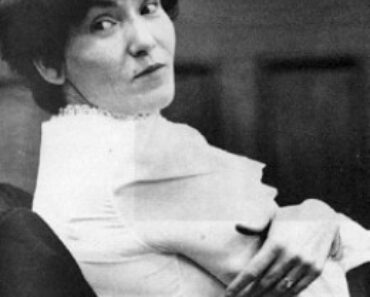
Margaret Rudin photo from court

The Trial of the Las Vegas Black Widow

A City Divided

When Margaret Rudin returned to Las Vegas in 2000, the city was ready for her – and so was the media. To some, she was the Las Vegas Black Widow, a cold and calculating woman who had killed her wealthy husband for money. To others, she was a scapegoat – a middle-aged antique dealer crushed beneath the weight of rumor, misogyny, and poor legal counsel.

Her trial began on March 2, 2001, in Clark County District Court. By then, she was 57 years old and had spent over a year behind bars awaiting trial. The courtroom was packed with reporters and spectators; every detail – her clothing, her tone, even her posture – was scrutinized.

The State’s Case

The prosecution’s theory was simple – and damning.
Margaret Rudin, they argued, killed her husband Ron Rudin out of greed and anger. He had been preparing to divorce her, and his updated will would leave her with next to nothing. The only way to secure her fortune was to ensure his death occurred while they were still married.

Prosecutors painted her as a woman driven by entitlement and rage, someone who had grown tired of being controlled by Ron’s financial leash. They presented forensic evidence: traces of blood found beneath new carpet in the couple’s bedroom, a missing .22-caliber Ruger pistol, and testimony from a handyman who said he helped Margaret move a heavy trunk around the time Ron disappeared.

They argued she lured her husband to the house, shot him in the head five times, dismembered his body, and placed it in that same antique trunk – then drove it to the desert to burn it beyond recognition.

And to the jury, the picture fit too neatly to ignore.

The Defense Fights Shadows

The defense team was led by attorney Michael Amador, whose performance would later become as infamous as the case itself. From the beginning, the courtroom atmosphere was chaotic – disorganized filings, confused witnesses, and a defense lawyer more interested, it seemed, in his potential book and movie deals than in his client’s freedom.

Amador’s relationship with Margaret Rudin deteriorated quickly. She accused him of ignoring her input and focusing more on publicity than preparation. Midway through the trial, tensions boiled over in open court, with the judge scolding Amador for unprofessional conduct and forcing him to share duties with another lawyer.

The defense argued that Ron Rudin was a man with enemies – powerful business rivals and associates who may have had motives of their own. They pointed to the lack of direct physical evidence tying Margaret Rudin to the crime, noting that much of the prosecution’s case was circumstantial. But their strategy, though logical, was scattershot and unfocused.

In a case that demanded precision, they delivered confusion.

Media Obsession and Public Perception

From the first gavel to the final verdict, the Las Vegas media treated the trial like theater. Headlines screamed “BLACK WIDOW ON TRIAL,” and nightly broadcasts replayed her every facial expression.

The city’s fascination had little to do with forensics and everything to do with image – the aging beauty accused of killing her rich husband for inheritance, a story tailor-made for tabloid television. National outlets like CourtTV and Dateline NBC devoted special coverage to the case, transforming Margaret Rudin into a household name.

Even the courtroom itself became a stage.
Reporters later noted how Margaret would sit perfectly still, dressed in muted tones, her expression unreadable – a composure some mistook for coldness, others for dignity.

The Verdict

On May 2, 2001, after two months of testimony and eleven days of deliberation, the jury returned with their decision. Margaret Rudin was found guilty of first-degree murder with use of a deadly weapon.

The verdict landed like a thunderclap.
The so-called Las Vegas Black Widow was sentenced to life in prison, with the possibility of parole after twenty years. She was transferred to the Florence McClure Women’s Correctional Center, where she would spend nearly two decades proclaiming her innocence.

Outside the courthouse, a crowd of onlookers applauded the verdict. Others wept. Reporters called it “justice served.” But beneath the applause lay unease – the gnawing sense that something about the trial hadn’t been fair.

After the Gavel Fell

Behind prison walls, Margaret Rudin became both a cautionary tale and a cause.
She studied her case, read legal manuals, and filed repeated appeals alleging ineffective counsel. Inmates described her as polite, articulate, and unyielding – a woman convinced that her trial had been a performance staged for ratings rather than truth.

Years later, federal judges would agree. Her story – once a parable about greed – would evolve into a discussion about justice, media, and the ethics of defense.

But in 2001, none of that mattered. The verdict was in, the nickname was cemented, and the Las Vegas Black Widow disappeared behind the walls of a desert prison – leaving the public to decide what kind of woman she really was.


Margaret Rudin | The Las Vegas Black Widow


Imprisonment, Appeals, and the Vacated Conviction

The Years in the Desert

After the verdict, Margaret Rudin was transported to the Florence McClure Women’s Correctional Center in southern Nevada — a facility surrounded by chain-link and heat haze, where time moved slower than the desert wind.

Here, the Las Vegas Black Widow vanished from the tabloids and entered the quiet monotony of prison life. She spent her days reading, sewing, and studying legal texts. She took classes, attended chapel, and occasionally granted interviews to journalists who were still fascinated by her case.

“I didn’t kill Ron,” she said more than once. “But I did lose my life.”

She kept her cell tidy, almost obsessively so — a habit that mirrored her need to control what little she could. Fellow inmates described her as calm, even kind, but withdrawn. To some, she was simply another inmate; to others, she was a reminder that wealth and reputation offer no protection once the gavel falls.

Margaret Rudin photot in court

A Case That Wouldn’t Die

While most convicted killers fade quietly into obscurity, Margaret Rudin refused to disappear. From her small prison cell, she began a relentless campaign of appeals – handwritten petitions, requests for transcripts, and letters to journalists and legal advocates.

Her central argument was simple: she had been denied effective counsel. Her trial attorney, Michael Amador, had allegedly been unprepared, distracted, and entangled in personal interests, including a possible book and movie deal about her story. His performance during trial – chaotic, theatrical, and often incoherent – became legendary among Nevada legal circles as a case study in what not to do in a murder defense.

Rudin’s early appeals were denied at the state level. Courts upheld the verdict, insisting that despite Amador’s missteps, the evidence against her was “sufficient.” Yet her persistence never faltered. For nearly two decades, she fought to have her case heard again – not for sympathy, but for what she called “a fair fight.”

Hope from the Federal Bench

Then, after almost 21 years, came the unthinkable.

In May 2022, U.S. District Judge Richard Boulware II reviewed the record of Margaret Rudin’s conviction and agreed that her constitutional right to effective counsel had indeed been violated. The judge called her representation “egregiously deficient,” citing failures that “undermined confidence in the outcome of the trial.”

In one sweeping motion, the court vacated her murder conviction, effectively erasing the verdict that had defined her life.

Margaret, then 78 years old, wept openly when she received the news. “I prayed for this for years,” she told reporters. “I didn’t know if I’d live to see it.”

It was the redemption she had chased through decades of appeals, and it came only after most of her peers – and even some of her original prosecutors – had moved on.

Freedom, at Last

By the time her conviction was overturned, Margaret Rudin had already been paroled in January 2020 after serving roughly twenty years of a life sentence. She walked out of prison a free woman for the first time in two decades – thin, gray-haired, and visibly older, but unbroken.

Her release was quiet; there were no cameras waiting, no fanfare. She relocated to the Midwest, where she began rebuilding what was left of her life. But the story didn’t end there.

Following the federal court’s decision, the Clark County District Attorney’s Office faced a choice: retry the case or dismiss it. After reviewing the evidence, in December 2024, the DA’s office formally dismissed all charges with prejudice – meaning she could never be tried again for the murder of Ronald Rudin.

The woman once branded a killer had, in the eyes of the law, been released not just from prison – but from history’s verdict.

Legacy and Controversy

Even with her record cleared, Margaret Rudin’s name remains polarizing. Some still believe she orchestrated her husband’s death; others see her as a casualty of sensationalism and a justice system that failed her twice – once in trial, and again in how it portrayed her.

Her story has been featured on CourtTV, Dateline NBC, and multiple true crime documentaries, each reframing the question: Was she a murderer who fooled the courts, or a wronged woman destroyed by bias and bad lawyering?

Now in her eighties, she lives quietly, occasionally giving interviews about criminal justice reform and women’s rights behind bars. “I don’t expect everyone to believe me,” she once said. “But I hope they understand how easily it could happen to them.”

Final Reflections by Firelight

The story of Margaret Rudin and Ronald Rudin is more than a tale of love gone wrong – it’s a mirror held up to everything we think we know about truth, justice and the masks people wear when money and marriage meet.

Two ambitious souls found each other in a city built on illusion. They built a life from glitter and grit, but behind their walls, trust rotted quietly until it burned – quite literally – in the desert fire that consumed them both.

The courts called her guilty. The headlines called her the Las Vegas Black Widow. And yet, decades later, the very same system admitted its error and erased the crime that branded her. What does that make her now – a murderer unproven, or a woman wrongly damned?

In the end, no one but the Mojave wind knows what truly happened that December morning in 1994. What we are left with are fragments: a burned trunk, a missing pistol, a millionaire’s secrets, and a woman who refused to be buried, even by history itself.

Some say she fooled the world. Others say the world simply wanted her to fit the story it had already written. And somewhere between the two – in that endless Nevada dusk – the spark of truth still flickers.


Additional Resources

Further Reading / Watching

This site contains affiliate links. We may, at no cost to you, receive a commission for purchases made through these links. Thank you for your support.


JOIN US

Fireside Crime Stories

Fireside Crime Stories logo

If the written word keeps you leaning forward into the shadows, then you’ll love settling back by the fire with us. On our YouTube channel, these same haunting stories are told in a softer voice – woven with stormlight, fire crackle, and quiet piano. Perfect for late-night listening, or for those who want to drift into slumber carried by true crime whispers instead of headlines. Step into the firelight, and join us there.

FIRESIDE CRIME STORIES


Related WickedWe Cases

This page is part of the WickedWe True Crime Archive – a resource for researchers, students, and true crime enthusiasts seeking verified facts, case records, and deeper historical context.